Kumamoto Rain Study: Seven Limited Editions Born in a Storm
Kumamoto Rain Study: Seven Limited Editions Born in a Storm
One tropical downpour. Seven images shaped by precision, instinct, and the unexpected choreography of a city in the rain.
I long for adventure and navigating new destinations—experiencing the weight of places built on layered histories. When I travel, I walk. I learn more from a city’s sidewalks than its tour routes: its architecture, its culture, the quiet record of lives that shaped it.
I’ve always seen the bigger picture. I read a scene quickly, anticipate how the moving pieces will fall into place, and wait for the moment when everything aligns. Years of practice have sharpened that instinct; it’s now as essential to my process as the camera itself.
That same discipline shapes my work. I dismantle, study, and rebuild—hundreds of layers, long hours, each detail refined until it supports the whole. Whether I’m watching a storm-soaked crosswalk or considering the physics that govern the frame, understanding is the anchor. Walking keeps that understanding tethered to lived experience. I’m always aware of where an image belongs—whether it extends an existing collection or initiates a new one.
I shoot in stride, adjusting as the day shifts. Travel rewrites the plan; the truth often appears in the pivot.
In Kumamoto, the story arrived as a storm. Rain thick as static, a tsunami warning vibrating on my phone. My gear is weather-resistant, but in that kind of downpour every decision becomes a calculated risk. No umbrella—just a rain jacket, my camera, and a heavy backpack.
The storm transformed the city. Sound dampened under the weight of the rain; umbrellas merged and drifted apart; cars and trams carved paths through the haze. I stood in it—soaked, crouched beside a post—trying to translate sensation into something visible. Images have always been the language I trust.
What comes next is the part almost no one sees.
Back in the room, the files move through Adobe Lightroom and onto an external drive. As previews populate, I skim, rate, and flag frames that carry tension, intention, or the exact alignment I anticipated earlier. Exhaustion and adrenaline compete, but I make sure every file is safe. Later—usually after the trip ends—I return with clearer eyes, refine the ratings, add keywords, and anchor each image in a catalog built across hundreds of thousands of photographs.
Then comes the grouping. Side by side in Lightroom, the strongest images must build a story—contrast, light, and tone forming a sequence that reads with coherence and purpose. For many photographers, that’s the final stage. But for me, digital work is only half the truth.
A monitor can hide faults. Paper reveals everything.
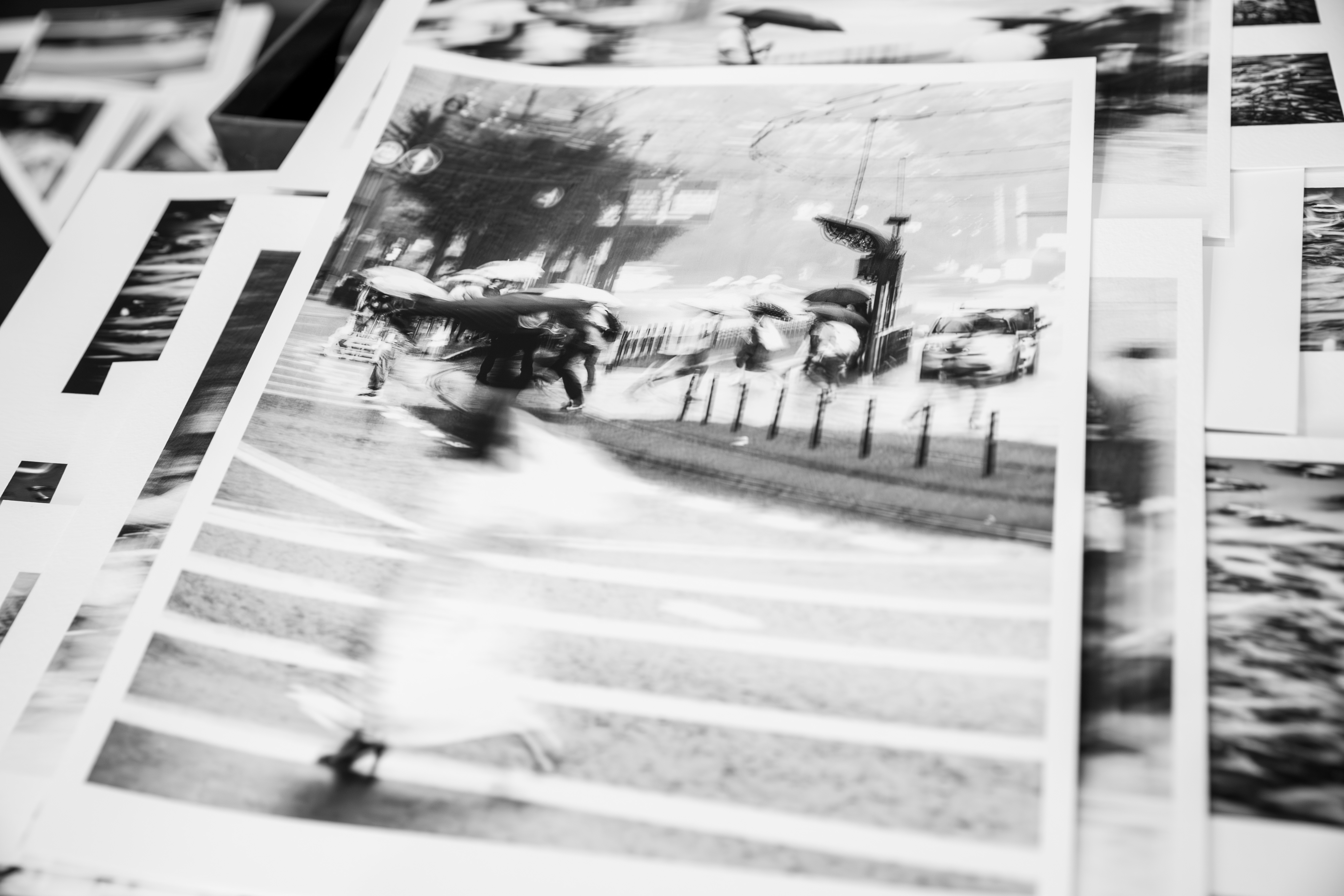
Some images fall apart the moment ink hits texture. So I begin with small proofs, arranged like the darkroom grids I learned on. That training never left: culling, refining, keeping what works, stripping away what doesn’t. Dodging and burning remain essential tools—guiding the eye, directing the narrative, refining structure. If the visual flow breaks even slightly, the image doesn’t advance.
Paper becomes another layer of the story. Many rely on metal or acrylic to elevate an image. I take the opposite approach: every piece must first succeed on Hahnemühle William Turner. Textured matte is exacting—tone, density, and calibration must be flawless. Only then do I consider how the image might translate to other materials.
For that to happen, the entire system has to be aligned: my Mac Studio, Lightroom and Photoshop, and an ICC profile built specifically for William Turner and the Canon imagePROGRAF 1100. This part of the process allows no shortcuts. Perfection is not accidental—it’s engineered.
After the final proofs hold up—on tone, balance, and structure—the work can finally stand on its own.
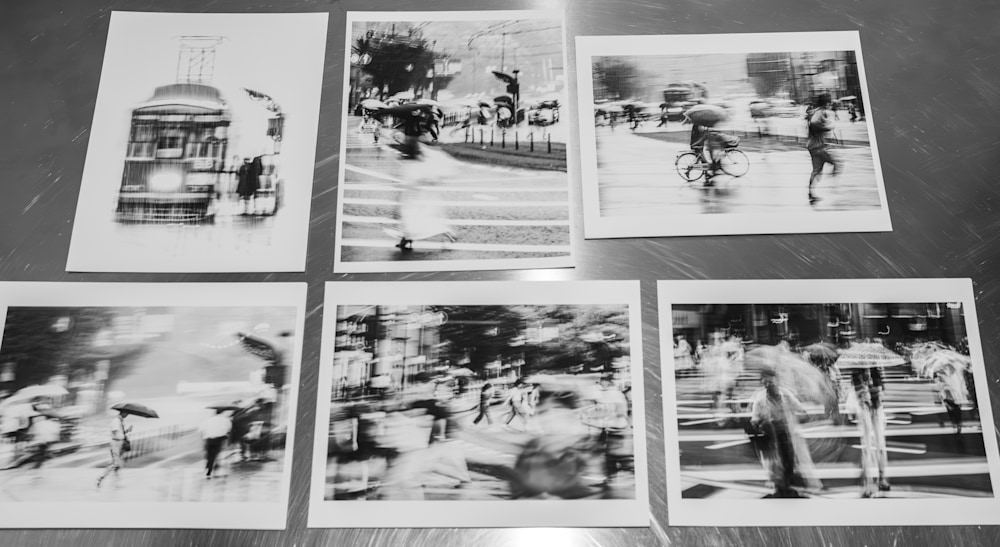
The final round proofs — laid out to confirm tone, texture, and narrative cohesion.
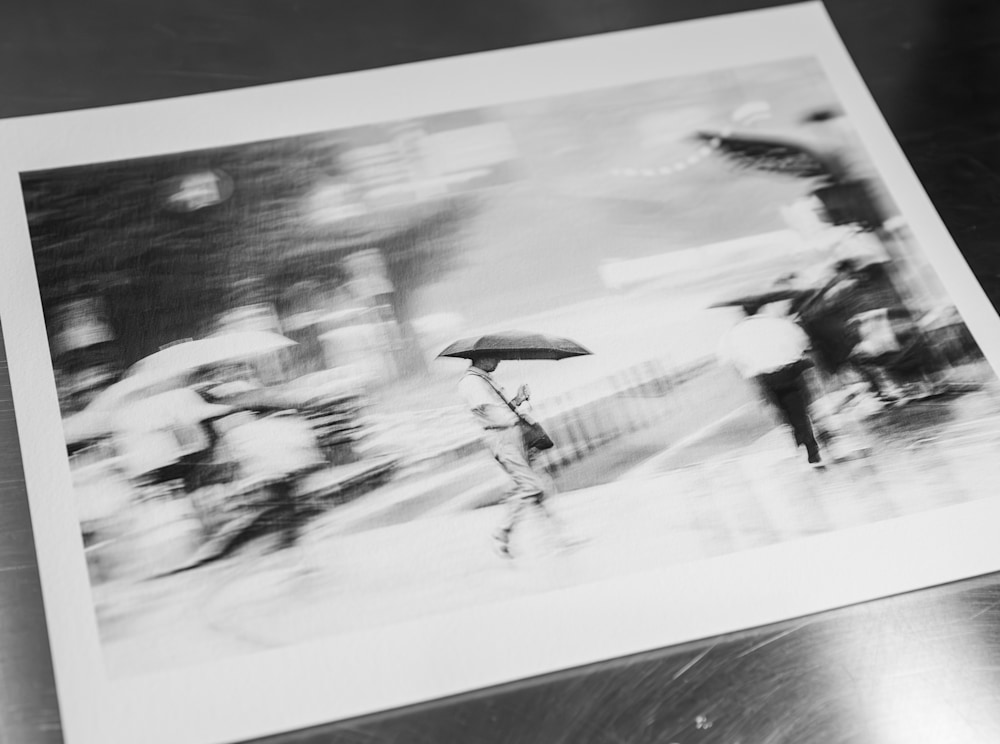
Up close: where paper texture reveals what the screen conceals.
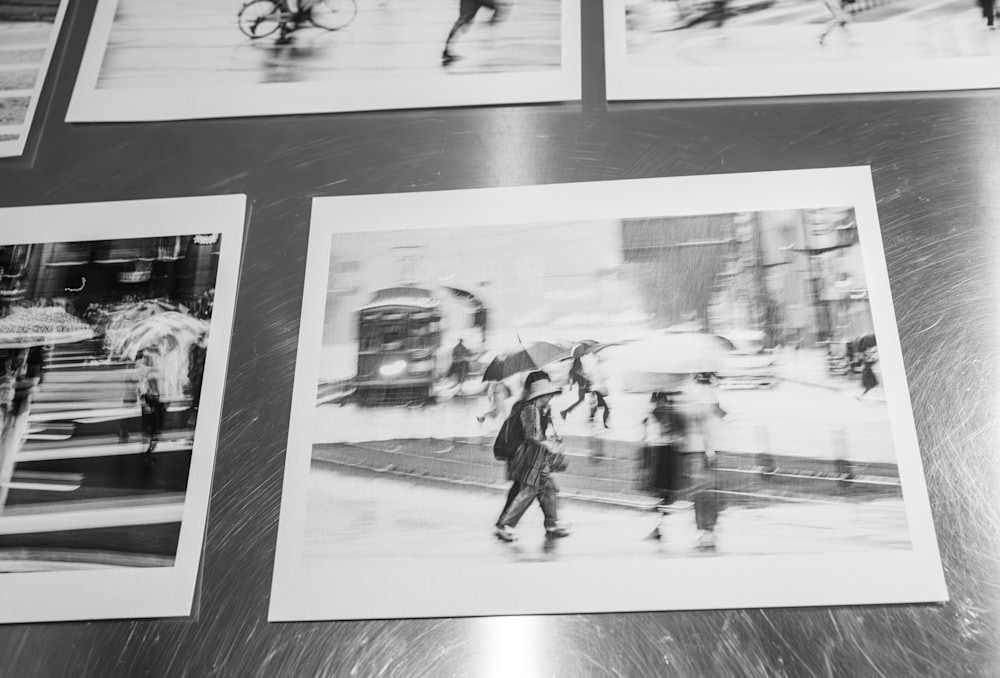
Every final print passes through my hands first — inspected, refined, approved.
Once the paper and tones are exactly where they need to be, the story can finally take shape. What follows are the seven images that weathered the storm, the edit, the proofs, and my own relentless scrutiny. Together, they form the narrative I carried home from Kumamoto — the visual symphony I heard in the rain.
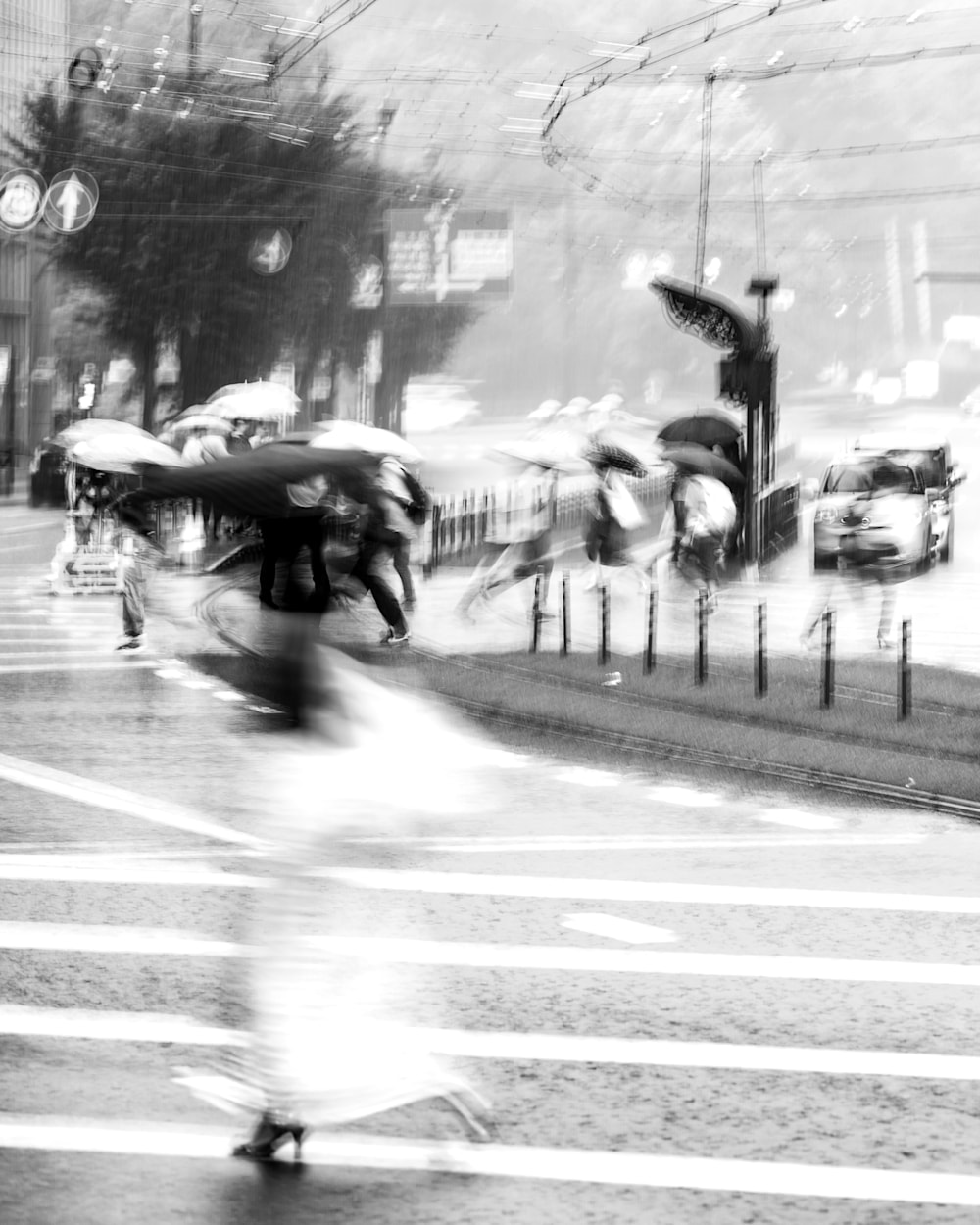
Happier Than Ever
She looks as if she’s spinning — skirt lifted, high heels carving a perfect arc, the umbrella sweeping behind her like a conductor’s gesture. The long exposure stitched the background pedestrians into her movement at just the right moment: their blurred legs and umbrellas briefly become her arms, even a suggestion of a face. A moment that never technically happened, yet feels more honest than what did. A woman spinning in her own weather.
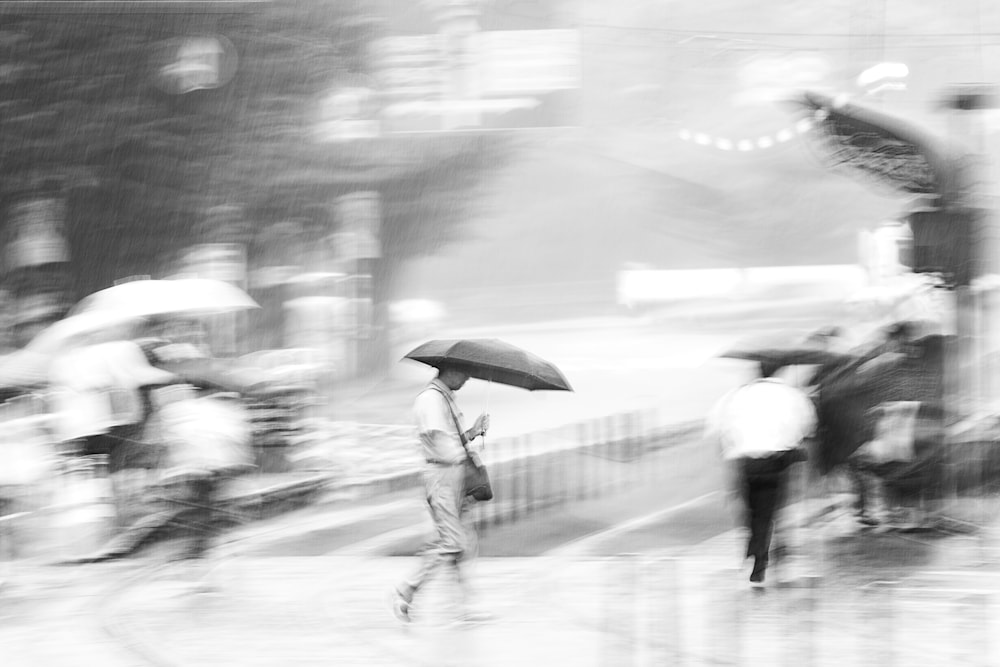
Solitude Amidst the Chaos
People were darting in every direction — making for the tram stop, rushing across the street, angling for cover. And then there was this man: unhurried, composed, walking through the downpour as if there’s no place he’d rather be. A moment of peace inside the madness.
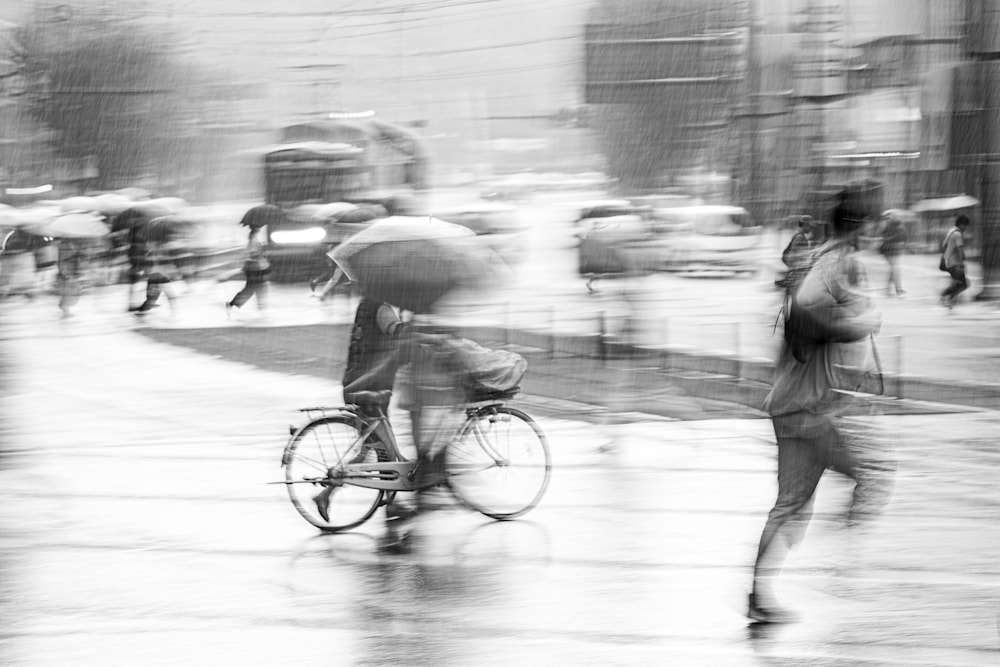
Crosscurrents
The background was a full sprint of umbrellas; the foreground, a man walking his bicycle with quiet intent. Just ahead of him, a ghosted figure in a fedora — the only person without an umbrella — carried on like a man immune to weather entirely. Rain reveals patterns you don’t see in real time, and here the storm split people into competing rivers of motion.
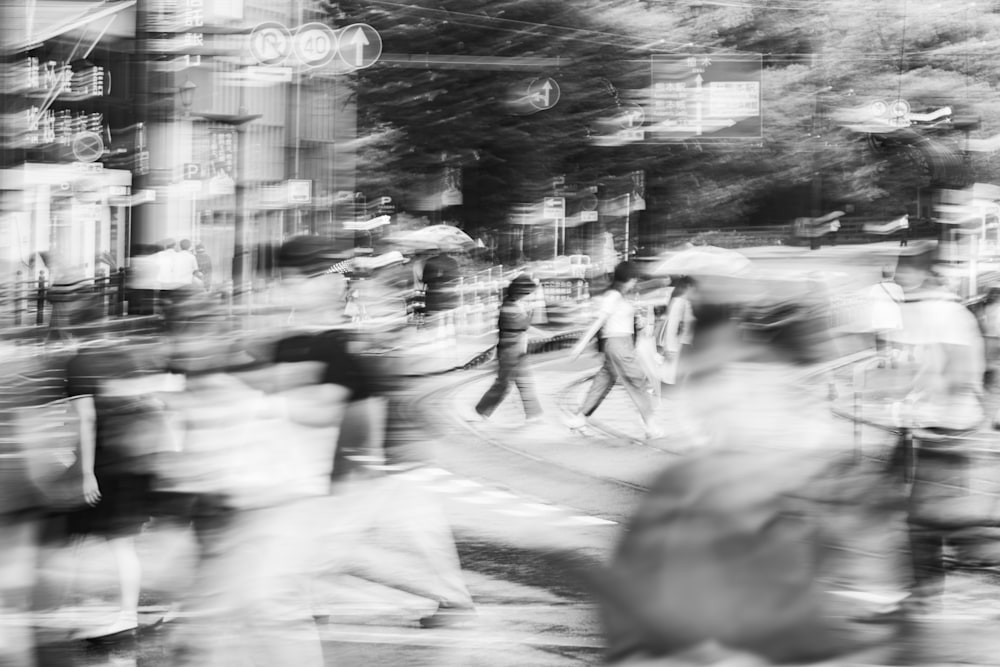
Beat of Your Drum
The storm created echoes everywhere — figures stretched, multiplied, softened by rain and shutter. But in the center, two women fell into perfect stride. Totally unaware of one another, yet synced as if following the same internal tempo. Their rhythm named the image for me before I even reviewed the file.
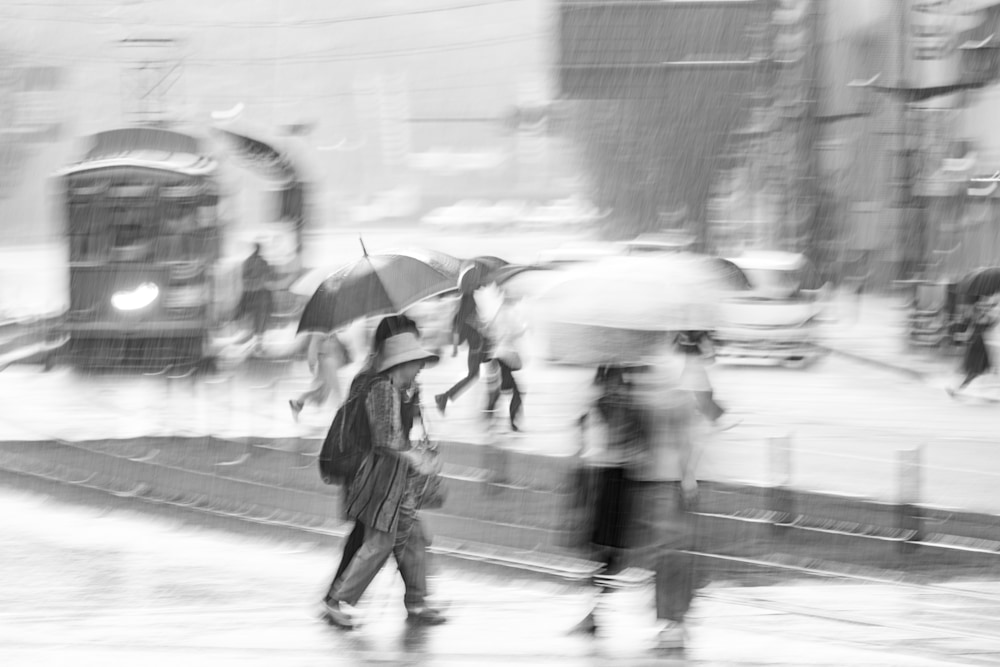
Up on the Catwalk
Heavy rain, umbrellas battling for control, people leaning into the wind — and then this woman. Her stride had so much presence it could have been pulled from a Paris runway. The storm framed her perfectly; all I had to do was pay attention.
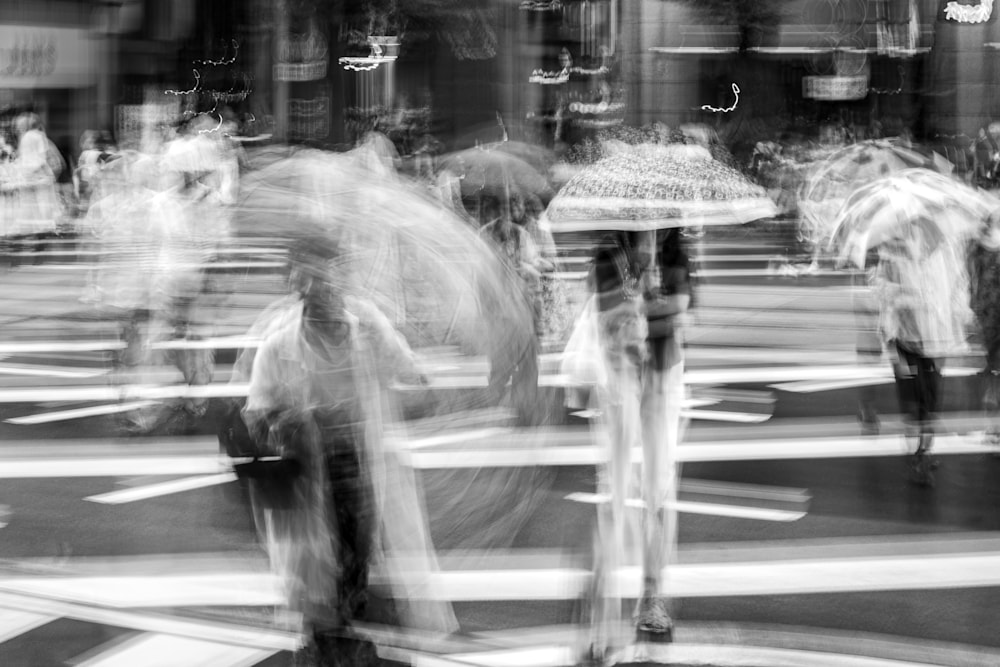
Midday Deluge
In the immediate foreground, her umbrella turned into a spinning pinwheel — a moment the storm created and the shutter preserved. Texture where there shouldn’t be texture. Motion sculpted by weather. A reminder that the rain often does half the work for me.
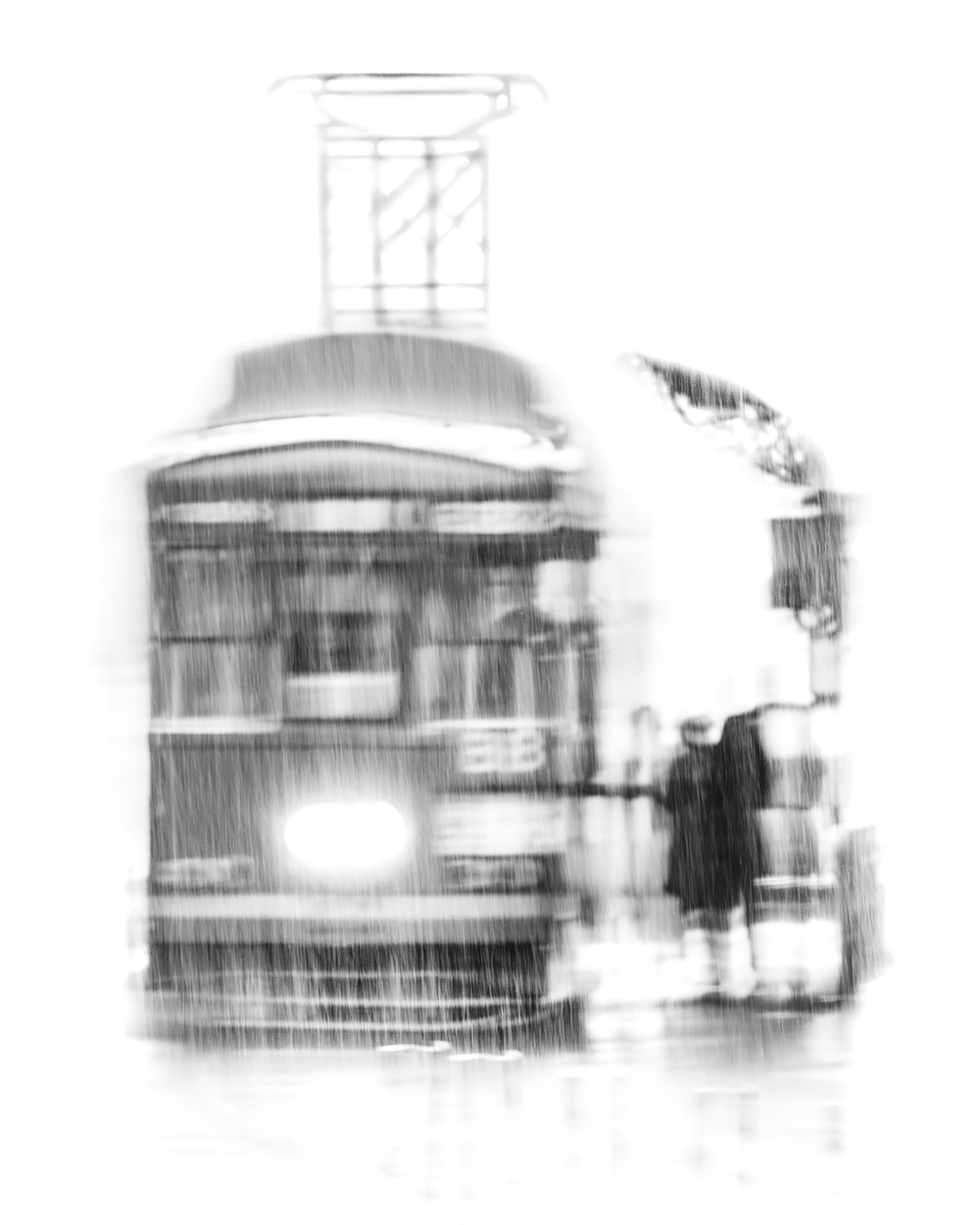
Heathen
The tram’s headlights hit the soaked pavement just right, turning the figures waiting to board into soft apparitions — four layered forms held together by rainlight. The atmosphere felt cinematic, haunted, and strangely serene. A Bowie title was inevitable.
Storms reveal things sunlight never does. In Kumamoto, the rain stripped the city down to gesture and instinct, leaving behind only movement, intention, and light. These seven images are the pieces of that experience — the fragments of a day when the weather rewrote my plans and handed me a story instead.
Limited Editions from the Kumamoto Rain Study