The Resistance Refined Everything
A fine artist's honest account of Art Storefronts — and what the fight gave her instead.
I've spent years in marketing and advertising. I've built campaigns, written copy, sold things I believed in and things I didn't. I understand the architecture of a pitch — the problem it names, the dream it offers, the moment it hands you just enough hope to sign.
I know all of this.
And yet.
The Promise
Art Storefronts sells a specific dream to a specific person.
The artist who is extraordinary at making work and exhausted by everything that follows it. The website. The SEO. The social posts. The marketing. The relentless, grinding business of being an artist — which, if you've ever attempted it properly, you know has almost nothing to do with art.
They promise to handle it. A custom site, built for you. A Co-Pilot program that posts to your socials, tailored to your voice, so you can focus on what you actually do. A community. A system. A path.
For an artist who has spent years creating in relative solitude — who knows their work is good but has no idea how to tell anyone — that promise sounds like salvation.
I fell for it. Completely. And I say that not with embarrassment but with honesty — because if someone with my background fell for it, anyone can. That's the point. That's worth knowing.
The Reality
Let me be specific about what I found, because vague warnings help no one.
The platform is cookie-cutter. Not somewhat — entirely. Every artist received the same mockup room. The same post text. The same hashtags, word for word, regardless of the work, regardless of the artist, regardless of whether any of it made the slightest sense for what you were trying to say.
The Co-Pilot program — the one promised to be tailored to your voice — posted content so generic, so indistinguishable from every other artist on the platform, that I began losing followers immediately. An existing audience, built over years, quietly eroding because of automated posts that had nothing to do with me or my work.
The aesthetic of the platform actively works against refined work. Despite my repeated objections, the site defaulted to incessant discount pop-ups and sale banners — "BUY NOW — ON SALE" plastered across pages even when I had deactivated the sale on my end. They refused to remove them. A platform selling itself to fine art photographers that plasters your work with clearance rack language is not a platform built for fine art. It is built for volume. Those are not the same thing, and the difference matters enormously to the collectors you are trying to reach.
Limited edition fine art with a "BUY NOW — ON SALE" banner is not fine art anymore. It's a clearance rack.
The financial structure is worth understanding before you commit. Setup costs can run into thousands of dollars. Monthly fees on top of that. Commissions on sales. Credit card transaction fees. And — this was never made clear to me upfront — a significant markup on prints fulfilled not by Art Storefronts, but by third-party labs you could work with directly.
I had an existing relationship with my print lab of many years. Art Storefronts inserted themselves as the gatekeeper between me and that lab — collecting payment, marking up the cost, and taking a cut on top of the commissions and fees I was already paying. They are not a fulfillment company. They are a toll booth on your own business.
Their SEO guidance is, to put it plainly, designed to keep you dependent on them.
Art Storefronts' own support documentation — still publicly available — describes SEO as "potentially a huge waste of time and money" and instructs artists to leave all SEO fields blank, trusting their automatic algorithm instead. The same document warns artists, in bold capitals, never to pay anyone for SEO help.
This is written on the support page of a platform that charged thousands of dollars for a full service site build — a site that, in my case, was never indexed by Google at all. I was invisible in search for weeks. Their automatic SEO feature did not catch it. And their guidance had trained me not to look.
I want to be precise about what this means: a platform that discourages independent SEO is a platform that keeps you dependent on their system for traffic. An artist who ranks in Google doesn't need them. The advice and the business model are not in conflict. They are the same thing.
What was not delivered in my full service site build: proper Google tag implementation. SEO foundations of any kind. A site that was actually visible on the internet.
Here is what concerns me most about that: how would a less experienced artist know? How would someone without a background in marketing and technology know to question whether their site was indexed, whether their Google tags were firing, whether the technical foundations of their business had actually been laid? The answer is they wouldn't. And Art Storefronts, having told them SEO was unnecessary, gave them no reason to look.
When things go wrong, accountability is difficult to find. I was charged for an internal program I had never activated, never used, and could find no record of anywhere on my account. When I raised it, I was told I had subscribed. I had not. I was told to cancel it. I could not locate it to cancel. After weeks of pursuit, the charge was not refunded.
More seriously — being connected to the platform contributed to significant breaches of my Meta advertising account, resulting in unauthorized ads run on my behalf for unrelated businesses. The response time when I flagged this was measured in days, not hours. There is no direct line to anyone when something goes genuinely wrong.
Who It's For — And Who It Isn't
Here is what the research and my experience both confirm: Art Storefronts genuinely helps a specific kind of artist.
Someone who is new to selling online. Someone who needs significant hand-holding with technology. Someone who doesn't have an established voice or audience and is willing to accept a standardized approach in exchange for not having to think about it. For that artist, the community, the tutorials, and the structured support may well be worth the cost — provided they go in with eyes open about the financial structure, the SEO guidance, and the limitations of the platform's aesthetic.
But if you are a different kind of artist — if your work is specific, your aesthetic is refined, your voice is already formed, and you know the difference between a gallery and an infomercial — you will feel that mismatch every single day.
And here is what the Art Storefronts Facebook community quietly confirms, if you spend any time there: artist after artist, some having stayed for years, sharing that despite doing everything the platform asked — showing up, posting consistently, following the system — they are exhausted, they have seen little return, and they are considering giving up. Not just on the platform. On selling their work entirely.
That last part is the one that stays with me.
These are not people who didn't try. These are artists who tried for years. The platform is not designed to tell you when it isn't working for you. It is designed to keep you engaged, keep you paying, and keep you believing that more effort will eventually produce the result you were promised.
For many artists, it will not. And that needs to be said plainly.
What It Gave Me
I want to be careful here, because this post is not a takedown. It is a map.
Here is what a year of daily battles with a platform that didn't care actually gave me: absolute clarity.
Fighting for what I wanted — against every limitation they placed, every generic template, every automated post that wasn't mine, every sale banner I couldn't remove — forced me to define exactly what I did want. Not just the presentation. The work itself. I began to see that some of what I'd been showing wasn't worthy of what I was building toward. The resistance stripped away everything that didn't matter and left only what did.
I waited — through the fourth quarter, through the holidays, through the busiest stretch of the year — and in January, I started over.
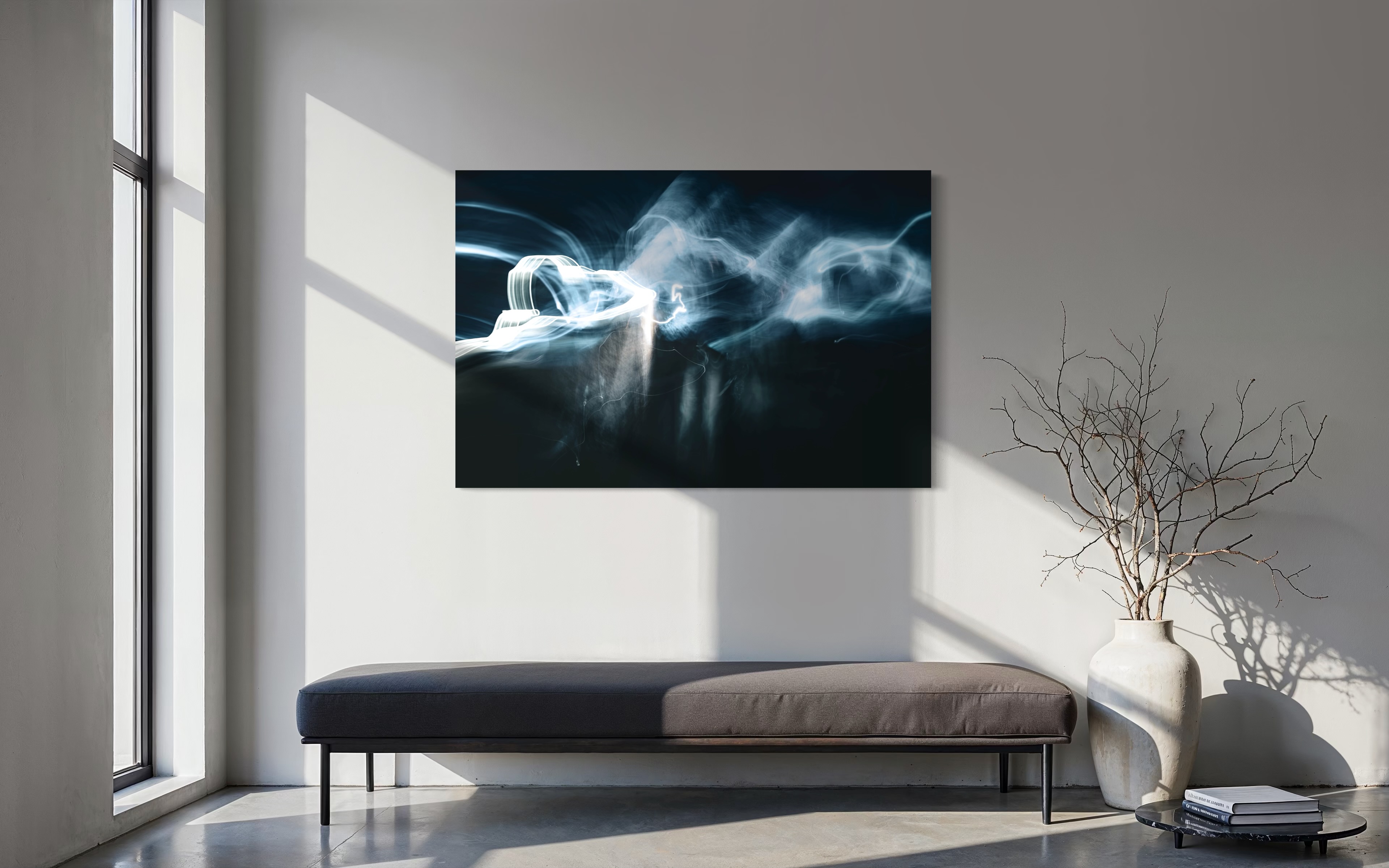
Four months of designing, building, writing, rewriting, filming, uploading, revising. A new platform built from scratch, on my own terms, without a template in sight. Every piece on it earned its place. Every edition limited — deliberately, permanently. No pop-ups. No sale banners. No automated voice pretending to be mine.
I'm told it was ready two months ago. I had my doubts. My personality does not allow for passable.
Before You Sign
If you are an artist considering Art Storefronts — or any platform making similar promises — here are the questions I wish someone had handed me:
Does this platform have room for your specific voice? Or does it work by flattening everyone into the same presentation?
What does the aesthetic of the platform actually look like — and is it consistent with how you want your work to be perceived? Pop-ups, discount banners, and high-volume sales language are not neutral. They communicate something to collectors. Make sure it's what you intend to say.
Who controls your domain, your images, your customer data? Read the contract before you sign, not after.
What does the print fulfillment structure actually look like? Who is fulfilling your orders, and who is collecting money in between? Ask explicitly. Get it in writing.
What is the exit process? Transferring a domain mid-dispute removes your primary leverage. Know the exit before you sign the entry.
What does the support structure look like when something goes genuinely wrong — not in the pitch, but in practice?
And finally: does the platform make money when you succeed, or regardless of whether you do?
That last question tells you almost everything.
The Part That Actually Matters
If you've read this far, you probably recognized something. Maybe it's Art Storefronts specifically. Maybe it's a different platform, a different year of pushing against something that wouldn't move. Maybe you're one of the artists I've seen in that Facebook group — quietly wondering if the problem is you, if you should just give up, if the work isn't good enough after all.
It is good enough. The platform was not.
There is a version of this industry that is designed to make artists feel like they need to be saved — and then charges them for the rescue. It preys most effectively on the people who are most serious about their work and least equipped to navigate the business side of it. People of extraordinary talent and limited resources, who can least afford to spend years and thousands of dollars on something that was never built with them in mind.
I know, because I was one of them. And I had a significant advantage — years of marketing experience that should have protected me, and didn't entirely.
You are not alone. You never were.
Which is why I'm building the AbSTRAKT Treehouse — a grounded sanctuary in the digital wild. A gathering place for artists, makers, and everyday visionaries who are done fighting platforms that don't care and are ready to build something honest instead.
A space for painters, musicians, photographers, designers, writers, and everyday creatives — to explore the intersection of light, color, form, and feeling. To celebrate the quiet miracles of the ordinary: sunlight on a wall, a shared chord, the grain of wood, the gesture of a brushstroke. To share work that moves you. To learn to see. To gather in circles and speak honestly about what this life actually requires.
We especially welcome the artists who don't fit the mold — those who live at the edges, who create from instinct and emotion, whose work doesn't ask for permission but reveals something essential.
Whether you're a seasoned artist or just learning to trust your eye, you are welcome here.
Come as you are. Bring your hands, your heart, and your way of seeing.
Let's build something honest and luminous — together.
Or simply reply. I read everything.
— Angie
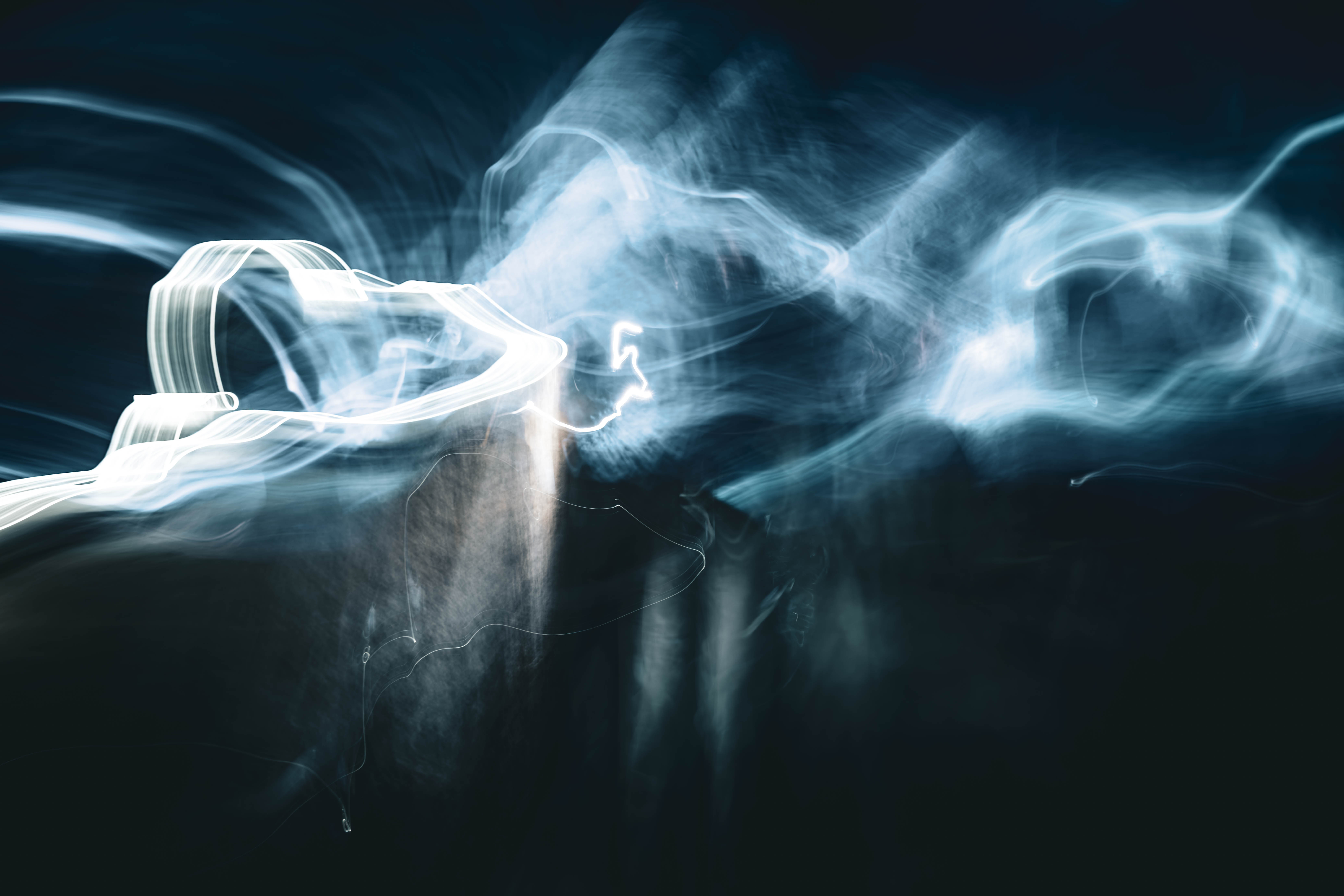
Angie Harker is a fine art photographer working in long exposure and intentional camera movement. Her limited edition prints are available at angieharker.com. She is the founder of the AbSTRAKT Treehouse — a community for artists navigating the business of art with integrity.