
City Noir
The Collection
When color falls away, pressure remains
City Noir
The Collection
When color falls away,
pressure remains
City Noir
The Collection
When Color Falls Away,
Pressure Remains
Black and white is photography's native language — the elegance of early film, the tradition of cyanotype, Van Dyke, gum prints. The defining moment made with an eye.
Colour is never incidental. When it serves the image, it stays. When it competes — pulling attention from the gesture, the motion, the raw pressure of a moment — it goes. Every image in City Noir made that choice clear.
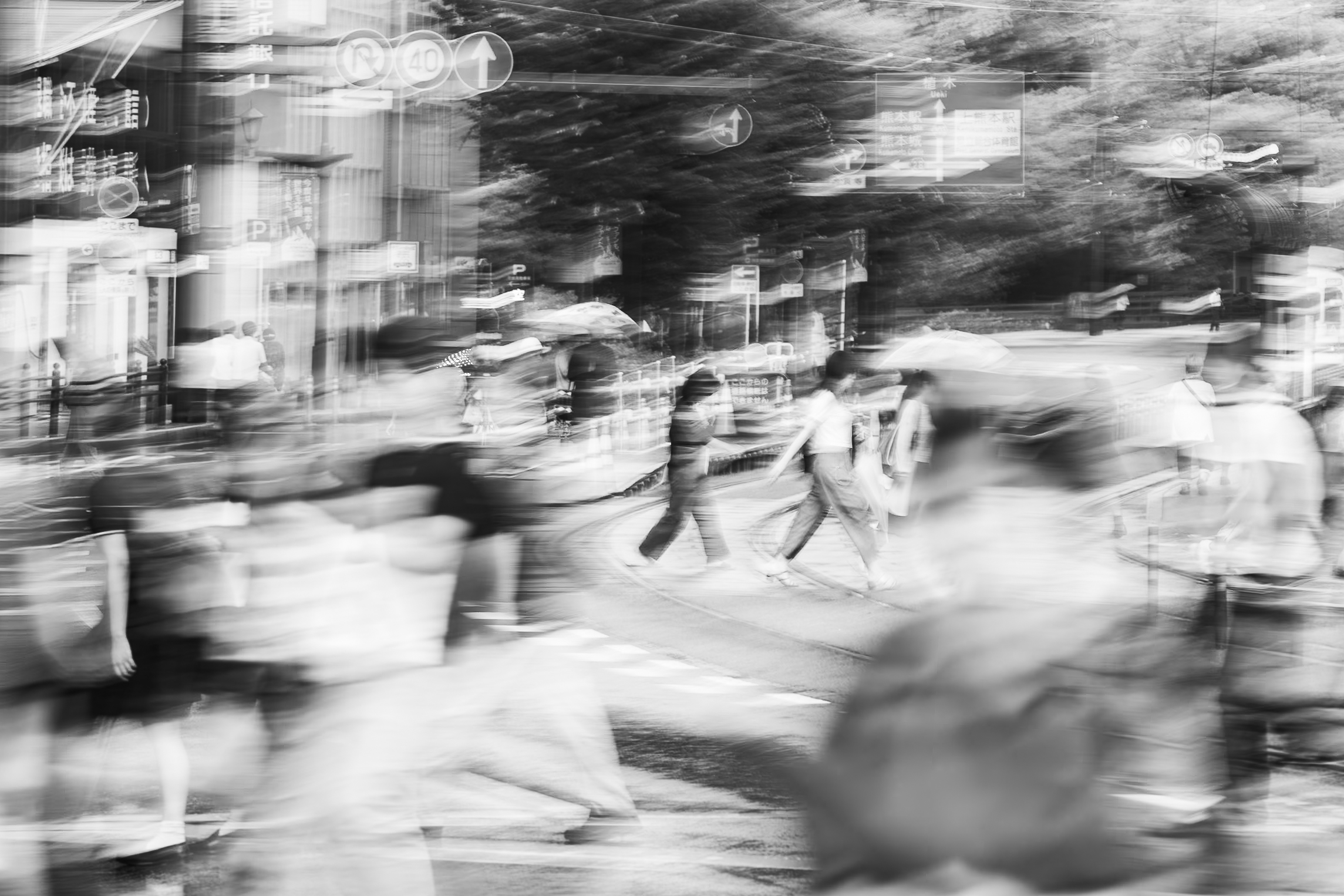
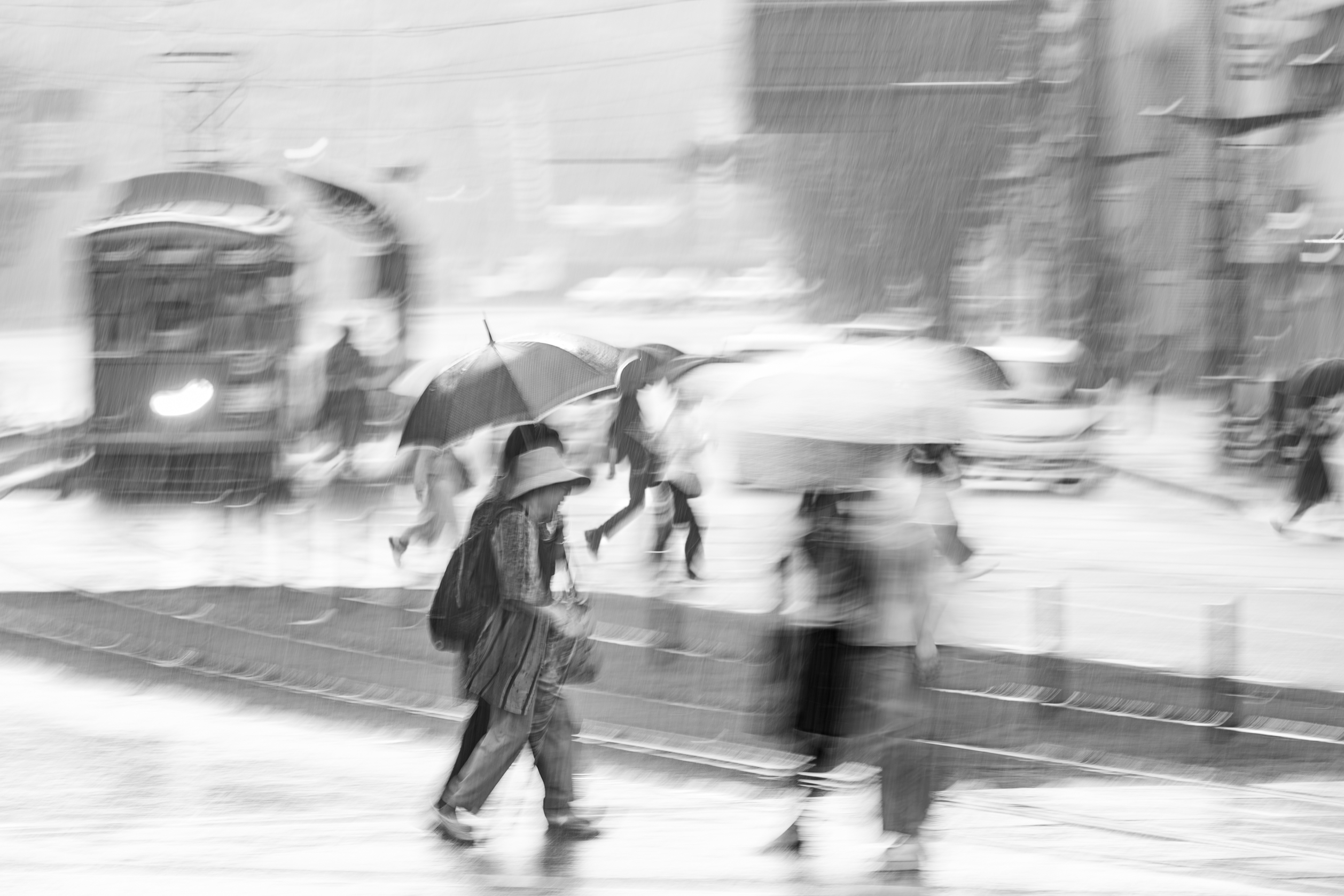
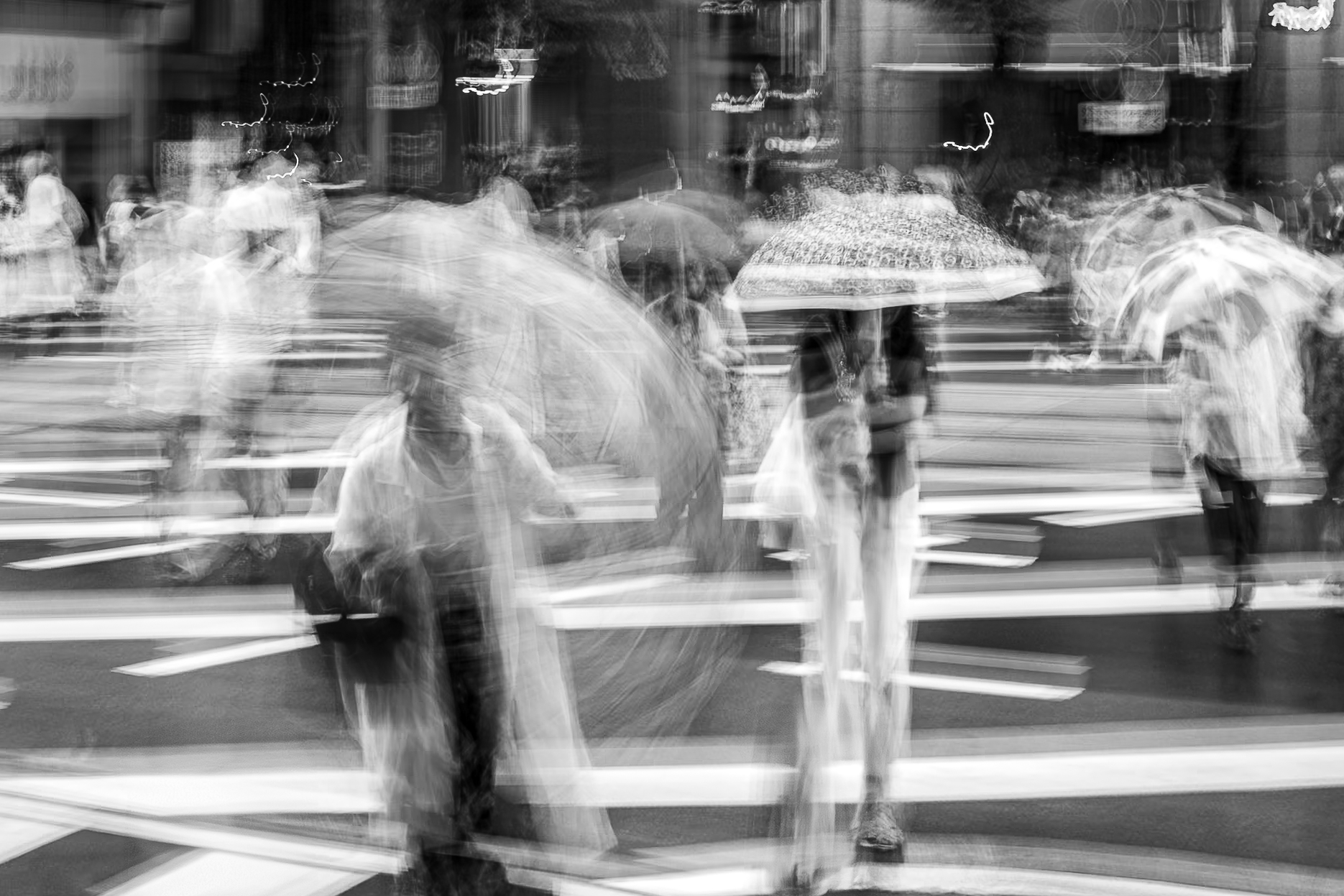
The driving rain in Kumamoto. The particular pressure of Brooklyn at its most unguarded. The drama of Buenos Aires rendered in silver. Monochrome does not simplify these scenes — it concentrates them. Shadow. Texture. Motion. Pressure made visible. The image reduced to its essential truth — across cities, conditions, and every quality of darkness a street can hold.
Kumamoto rain study
the Series
Soaked through.
Entirely at home.
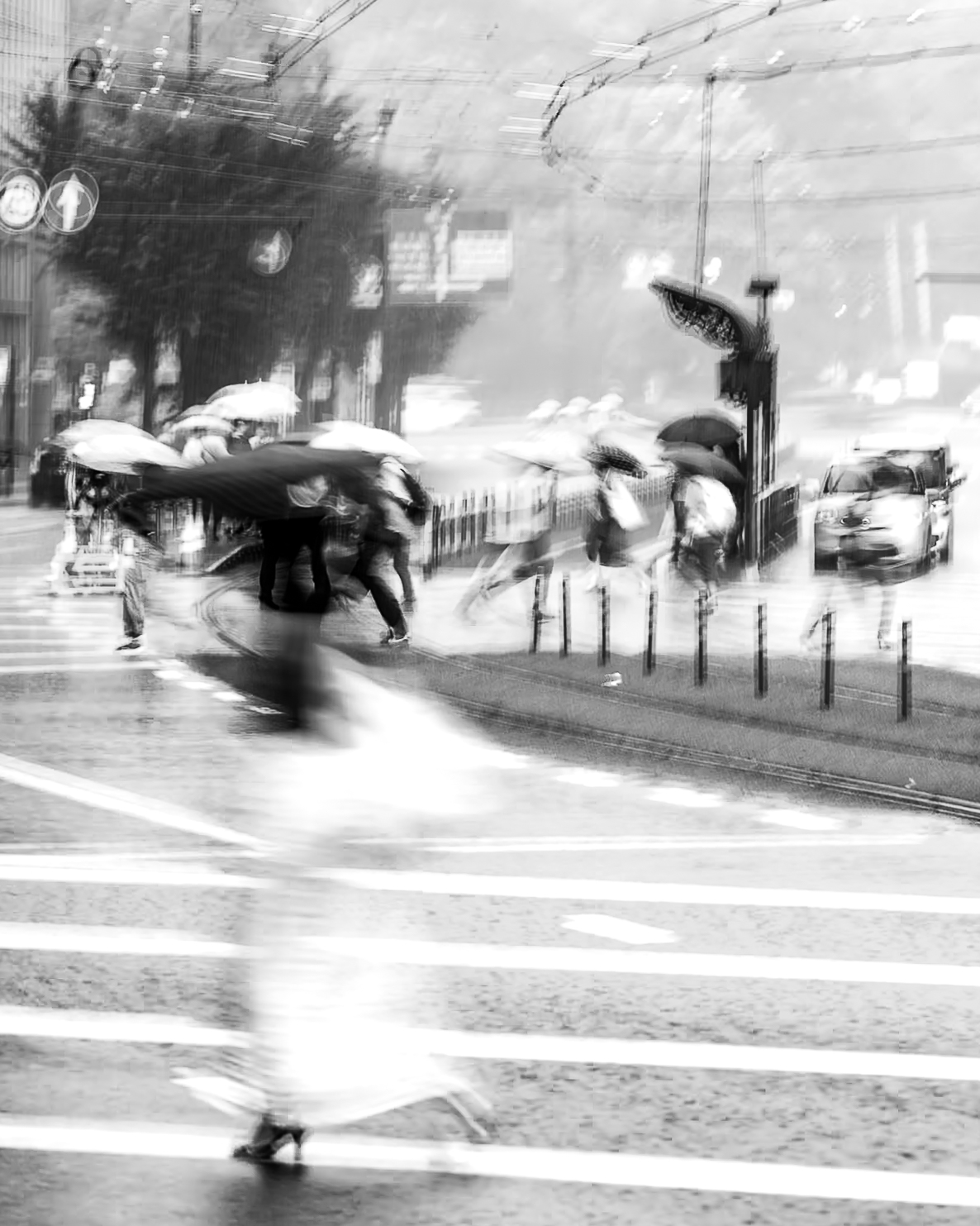
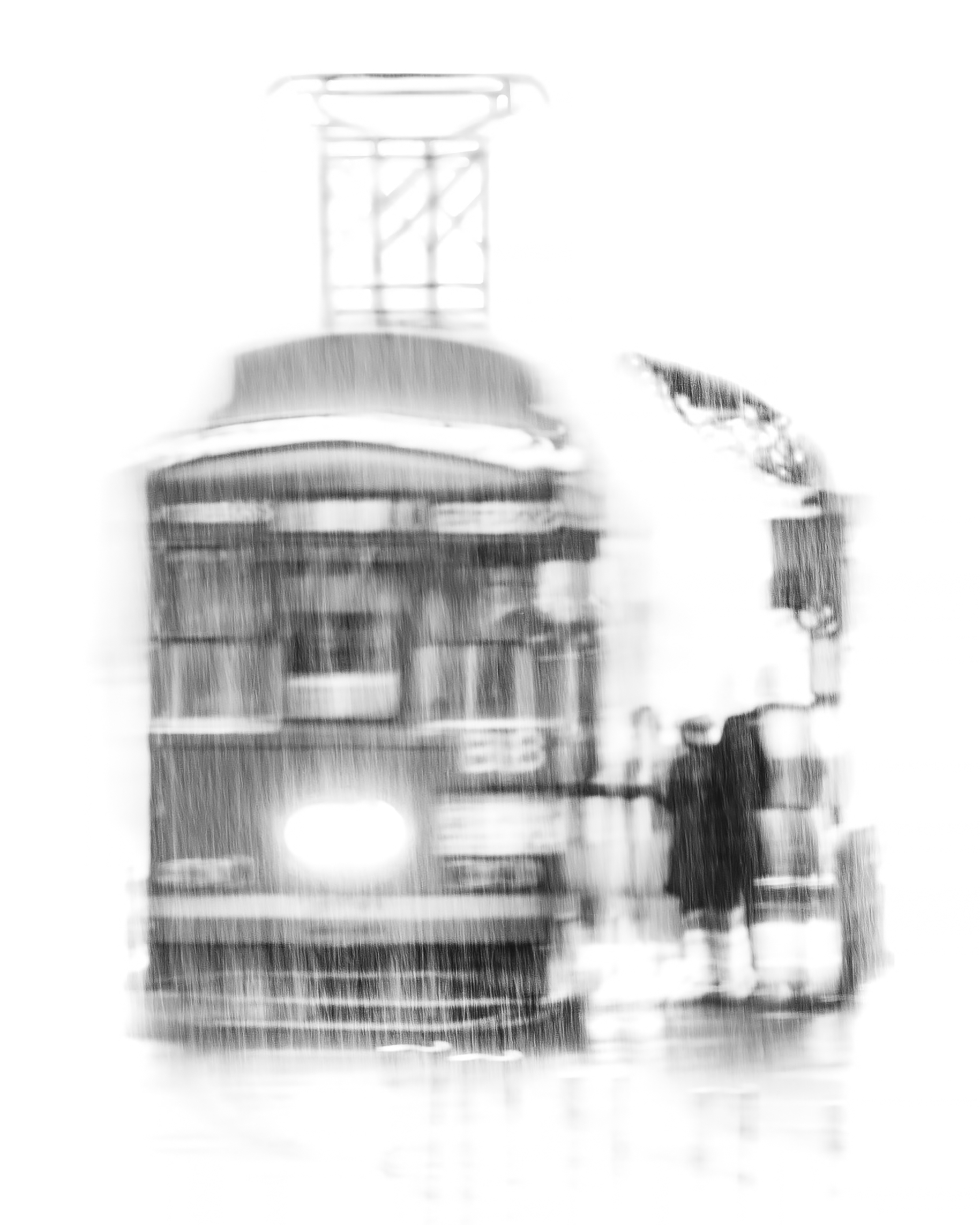
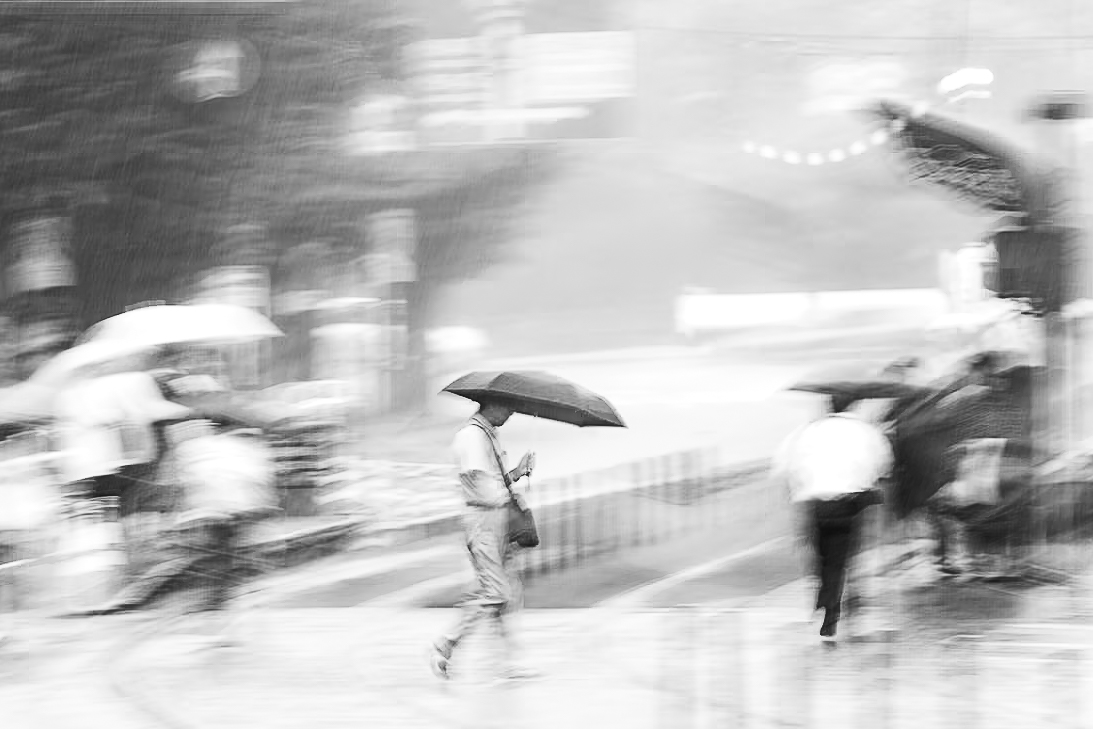
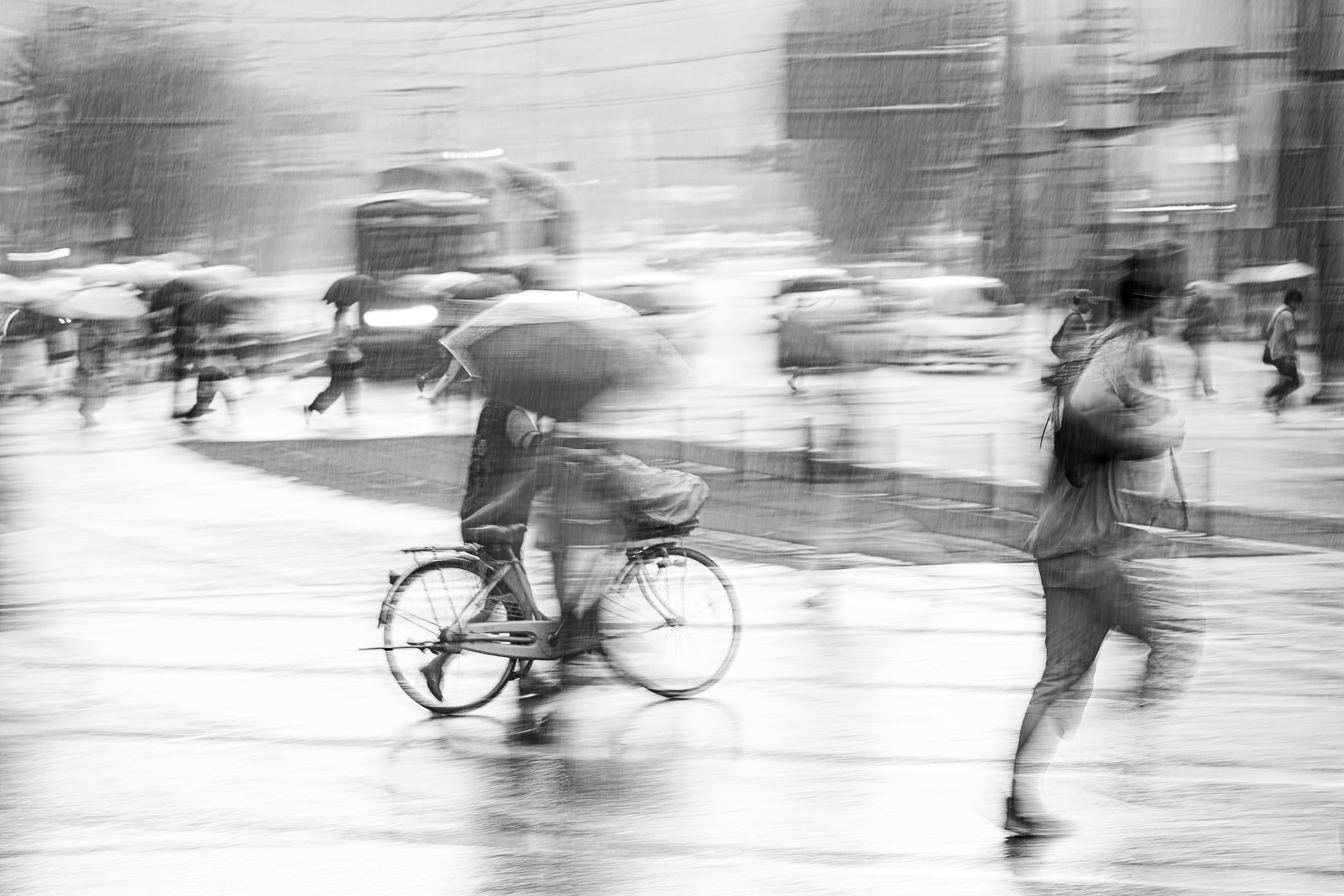
Kumamoto in a tropical downpour. A tsunami warning had been issued. The city kept moving regardless — umbrellas, trams, figures pressing forward without hesitation, the storm simply part of the arrangement. Rain has always felt like home. Monochrome was the only honest response — colour would have diluted what the storm made visceral.
Black and white is photography's native language — the elegance of early film, the tradition of cyanotype, Van Dyke, gum prints. The defining moment made with an eye.
Colour is never incidental. When it serves the image, it stays. When it competes — pulling attention from the gesture, the motion, the raw pressure of a moment — it goes. Every image in City Noir made that choice clear.
The driving rain in Kumamoto. The particular pressure of Brooklyn at its most unguarded. The drama of Buenos Aires rendered in silver. Monochrome does not simplify these scenes — it concentrates them. Shadow. Texture. Motion. Pressure made visible. The image reduced to its essential truth — across cities, conditions, and every quality of darkness a street can hold.
Black and white is photography's native language — the elegance of early film, the tradition of cyanotype, Van Dyke, gum prints. The defining moment made with an eye.
Colour is never incidental. When it serves the image, it stays. When it competes — pulling attention from the gesture, the motion, the raw pressure of a moment — it goes. Every image in City Noir made that choice clear.
The driving rain in Kumamoto. The particular pressure of Brooklyn at its most unguarded. The drama of Buenos Aires rendered in silver. Monochrome does not simplify these scenes — it concentrates them. Shadow. Texture. Motion. Pressure made visible. The image reduced to its essential truth — across cities, conditions, and every quality of darkness a street can hold.
Kumamoto Rain Study
The Series
Soaked through. Entirely at home.
Kumamoto Rain Study
The Series
Soaked through. Entirely at home.
Brooklyn Noir
The Series
Structure. Shadow. Brooklyn.
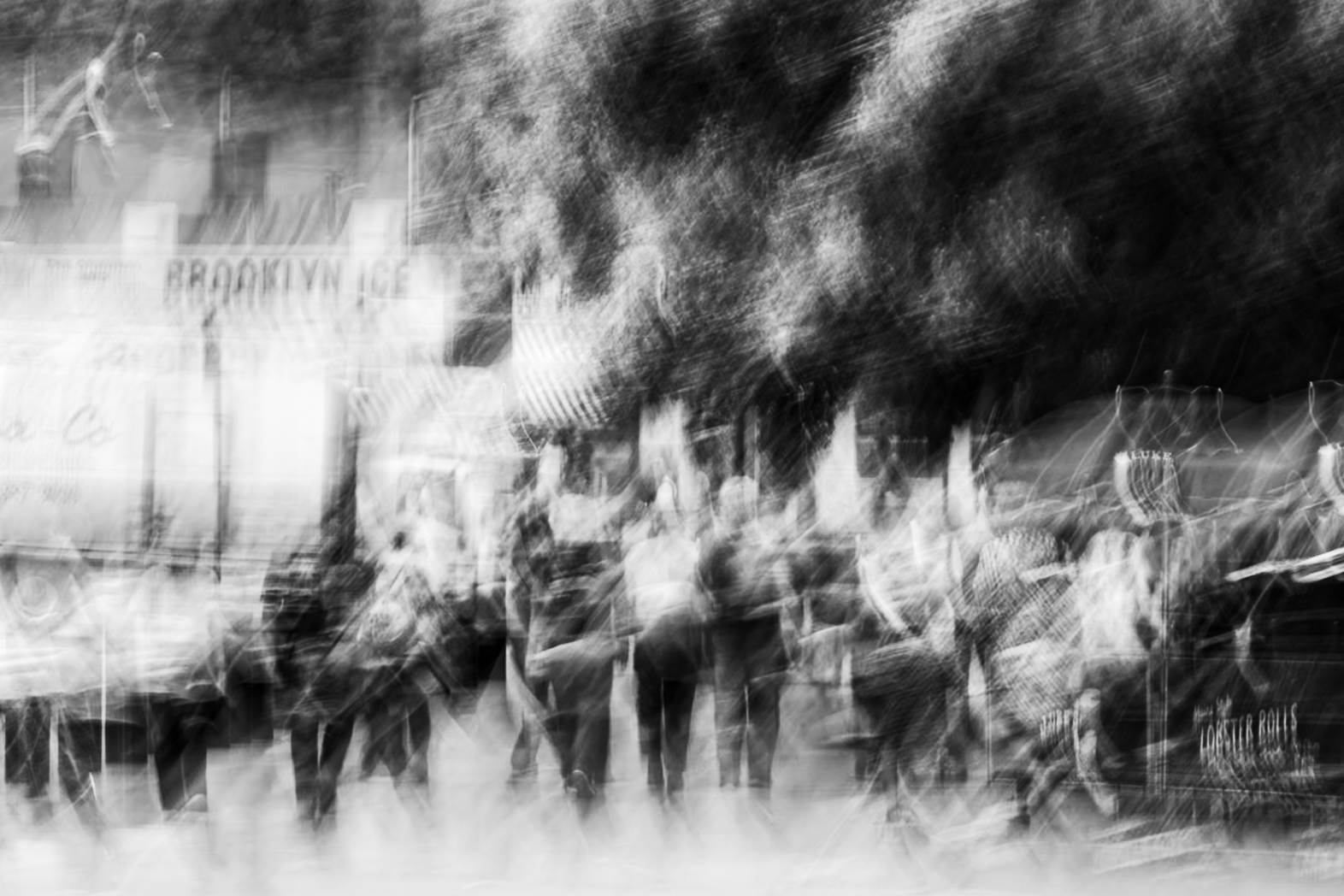
Brooklyn in stark relief — the line of silhouettes outside Brooklyn Ice Co., the vertical striations of Stretch Theory pulling the frame upward, the dramatic light and shadow of D.U.M.B.O. These images exist only in monochrome. Color was never part of the conversation.
Brooklyn Ice Co.
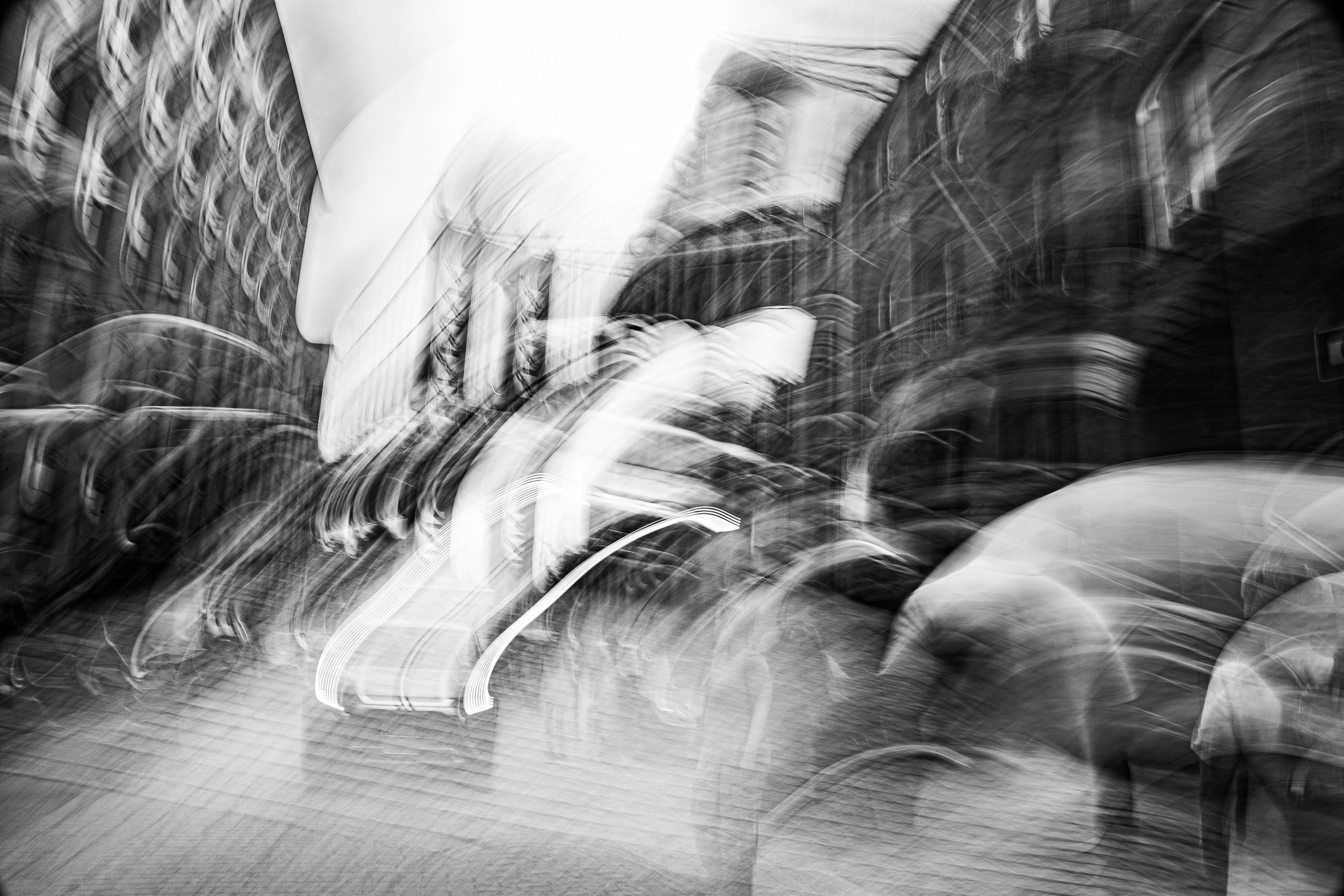
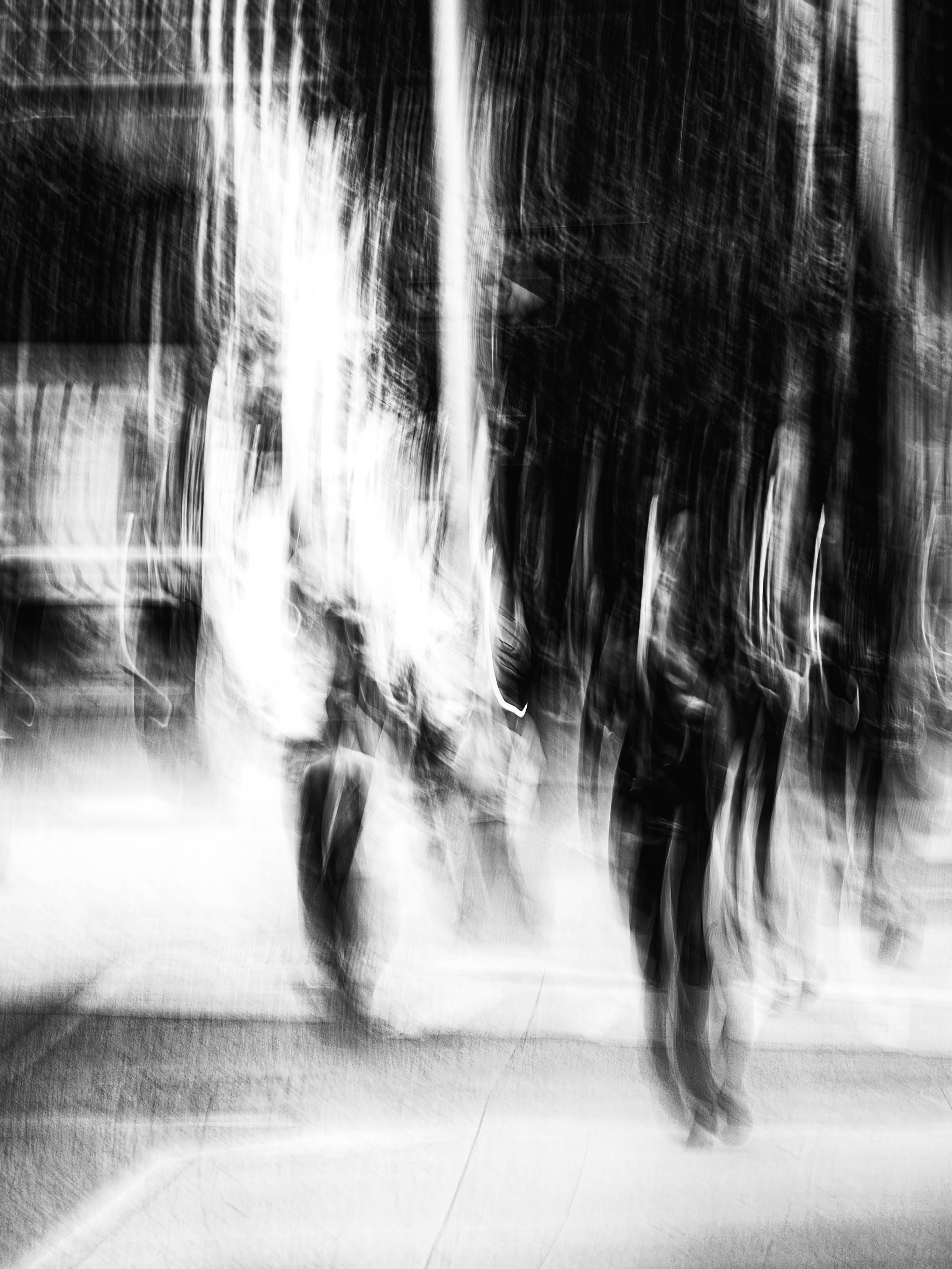
d.u.m.b.o.
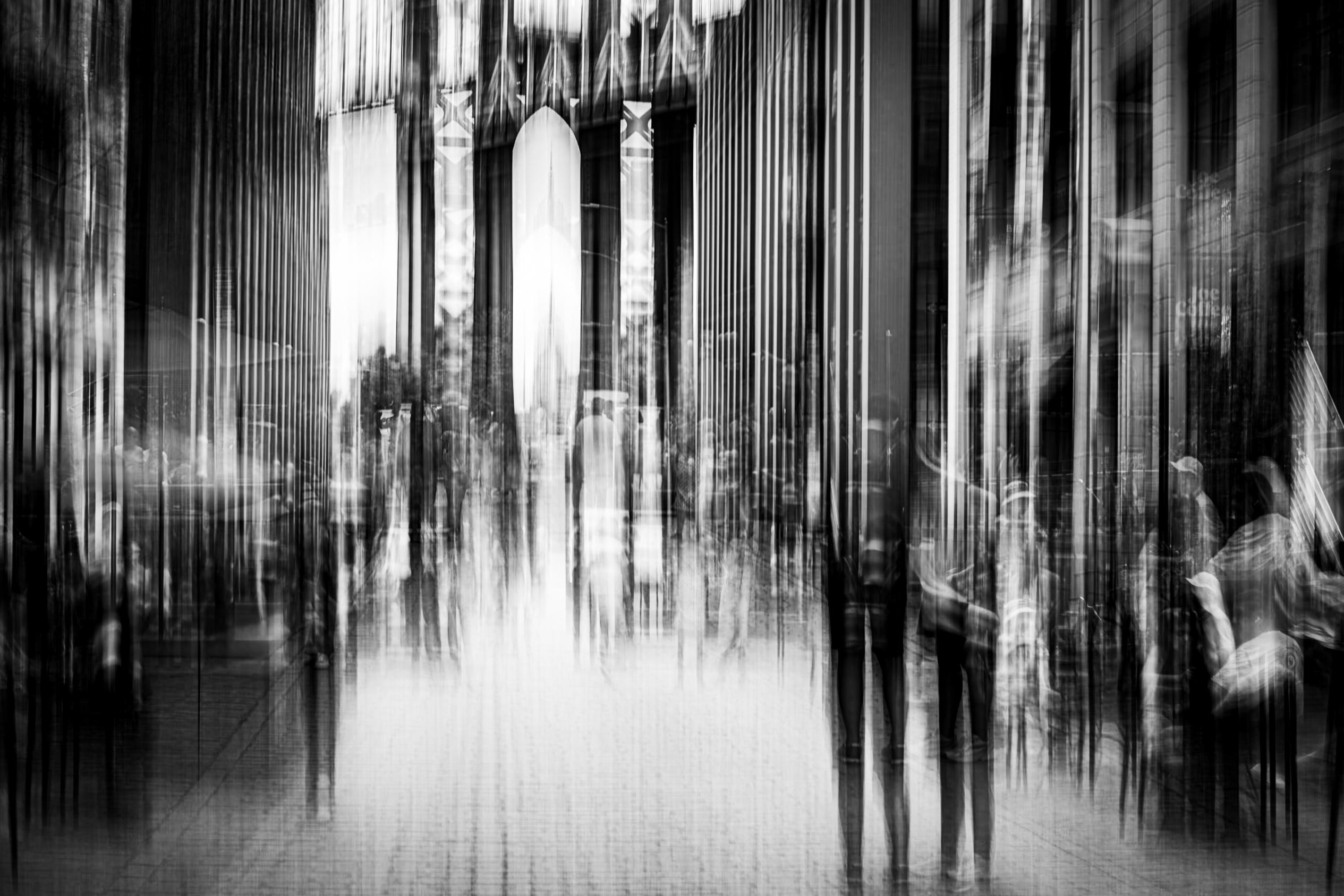
Stretch Theory
Language in Motion
The sEries
Fluent — In Motion
There is a particular freedom in moving through a city whose language you cannot understand — complete immersion in the unknown. All of it fascinating. The camera becomes the only fluency that matters, the frame the only translation available. Every surface a text. Every exchange a reminder that understanding runs deeper than words.
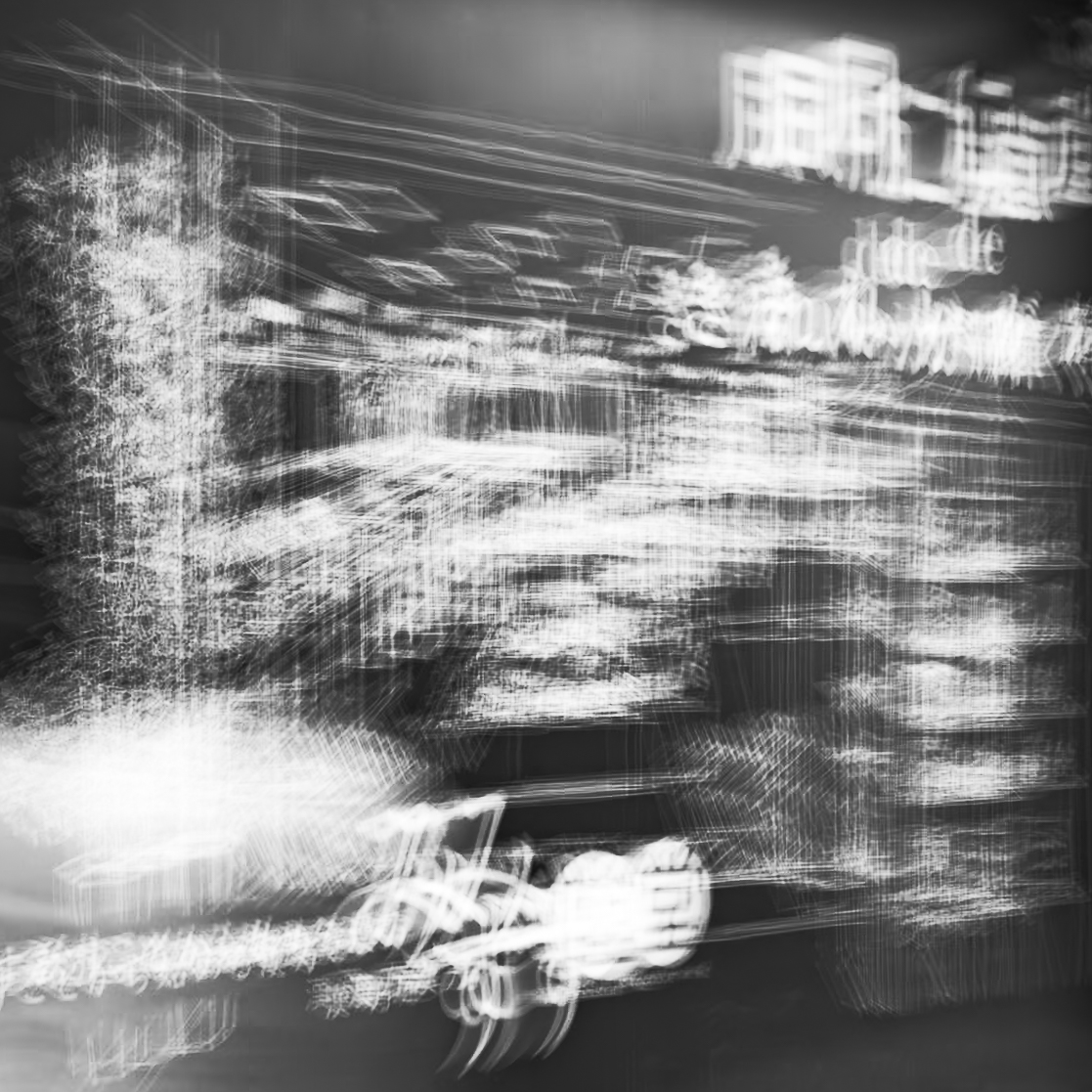
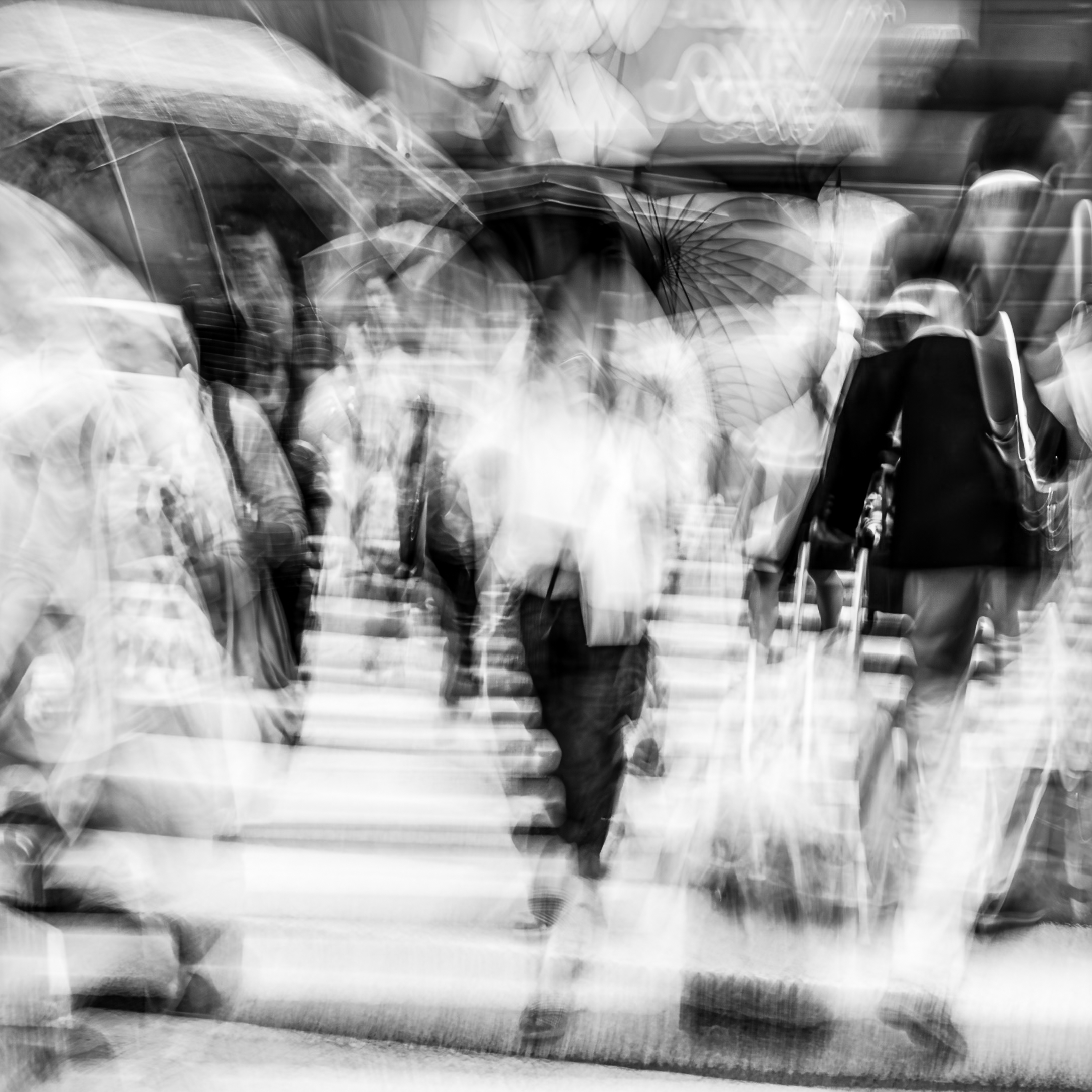
Kumamoto in a tropical downpour. A tsunami warning had been issued. The city kept moving regardless — umbrellas, trams, figures pressing forward without hesitation, the storm simply part of the arrangement. Rain has always felt like home. Monochrome was the only honest response — colour would have
diluted what the storm made visceral.
Kumamoto in a tropical downpour. A tsunami warning had been issued. The city kept moving regardless — umbrellas, trams, figures pressing forward without hesitation, the storm simply part of the arrangement. Rain has always felt like home. Monochrome was the only honest response — colour would have
diluted what the storm made visceral.
Brooklyn Noir
The Series
Structure. Shadow. Brooklyn.
Brooklyn Noir
The Series
Structure. Shadow. Brooklyn.
Brooklyn in stark relief — the line of silhouettes outside Brooklyn Ice Co., the vertical striations of Stretch Theory pulling the frame upward, the dramatic light and shadow of D.U.M.B.O. These images exist only in monochrome. Color was never part of the conversation.
Brooklyn in stark relief — the line of silhouettes outside Brooklyn Ice Co., the vertical striations of Stretch Theory pulling the frame upward, the dramatic light and shadow of D.U.M.B.O. These images exist only in monochrome. Color was never part of the conversation.
Language in Motion
The Series
Fluent — In Motion
Language in Motion
The Series
Fluent — In Motion
There is a particular freedom in moving through a city whose language you cannot understand — complete immersion in the unknown. All of it fascinating. The camera becomes the only fluency that matters, the frame the only translation available. Every surface a text. Every exchange a reminder that understanding runs deeper than words.
There is a particular freedom in moving through a city whose language you cannot understand — complete immersion in the unknown. All of it fascinating. The camera becomes the only fluency that matters, the frame the only translation available. Every surface a text. Every exchange a reminder that understanding runs deeper than words.
BY INVITATION
Early access. First to see. First to own.
Your email stays private. No sharing. Ever.


BY INVITATION
Early access. First to see. First to own.
Your email stays private. No sharing. Ever.
BY INVITATION
Early access.
First to see.
First to own.
Your email stays private.
No sharing.
Ever.